
Entering Competitions
A Little Free Advice for You

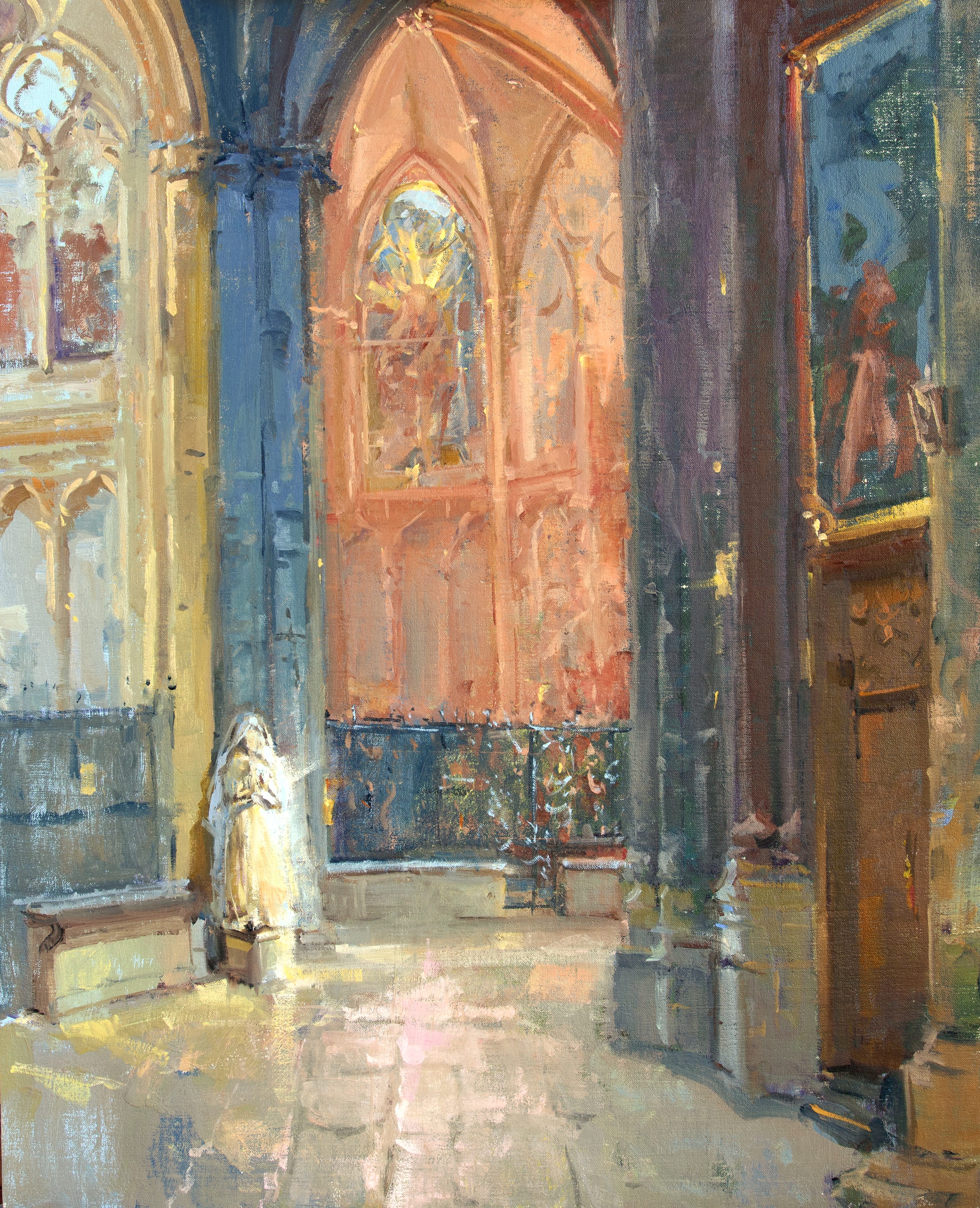
Solemn Illumination, Oil Painters of America National Juried Exhibition, 2026.
I recently did a short podcast on this subject, but I thought it deserved an article. I hope you find it helpful.
The most important thing to consider is: Is this the competition one for me?
There are so many choices for us to enter. Many of the entry fees are quite expensive. Choosing only those exhibitions that are a good fit for your work is imperative. Never, under any circumstances, enter a competition that you think you have to “change your style a little” in order to be accepted. It’s a total waste of time and money.
Allow me to share a story. For many years, I entered the Oil Painters of America exhibitions. The first one I got in was in 2005. It was a National, meaning very exclusive. I honestly think it was a fluke. There was my so-so, few-hundred-dollar painting hanging next to David Leffel’s $100K painting. (Maybe I am exaggerating). Anyway, it was 7 more years before I was accepted to a National. I could have given up. I thought about changing my style to be more “tightly rendered.” But I kept thinking about the works in that first show that were impressionistic, like mine, and I knew I just needed to get better at my own voice. I finally received my Signature Member Status. I spent the next 12 years applying for Master Signature. Again, I almost gave up for the exact same reasons mentioned above. Maybe my work was too contemporary, too impressionistic, too blah, blah, blah. Every year, when I got the single-page “sorry” letter, I was so upset. Friends like Dawn Whitelaw and Kevin Macpherson listened to me whine and cry and continued to encourage me. Every year, I said I would never try again. Of course, the deadline would come around and I would try again. Finally, a couple of years ago, I got the big-package “congratulations” envelope. I am sure it is because I stuck to my guns and did not try to change for them. Rather, my artistic abilities grew to meet the high standards required of the organization. I’m still pinching myself. For this to be so difficult to attain makes it even sweeter.
There are other organizations that I have given up on. Some for their political standards and nepotism, some because I finally figured out that I just don’t fit. Either way, I’m saving money on entry fees!
Make your entry count
Last week, while serving as a juror for a high-level exhibition, I was reminded of how very important it is to make a great first impression. There were three rounds of jurying, and it was super intense. The first round took about 12 hours; the second even longer; and the third about 8 hours. That’s just the time I spent. Several other jurors were doing it as well. That’s how seriously we take the responsibility. (No. We were not monetarily compensated.) In the first round, at least 10% of the entries could be completely dismissed for two reasons. One, of course, was the quality of the work. The other was the unprofessional way in which the work was presented. The photo was sort of from the side, on an easel, with a cat in the background licking its hindquarters. (Ok, again, I am probably exaggerating. You get the idea).
Stop! Take a beat and get a good photo. Period. It doesn’t have to be by a professional, but it needs to appear professional. You can do it. Just try a little bit harder. If you need professional advice on the topic, there’s a lot out there. Here’s a great source: https://www.workshopsinyorkshire.com/joehawkinsbundle. And seriously, the grand prize is like a b’zillion-trillion dollars. Do better.
Keep it professional, no matter the outcome
When you get a “we’re sorry” notification, don’t go bad-mouthing all over the inter-webs. As I mentioned above, the process for making selections is huge (if it’s fair). You could have made it to the very last round and have been knocked out by half a point. With five or more people on the panel of jurors, there is nothing to whine about. And if you discover that an organization is not fair, do not enter that competition again. Networking is no way to gain access to a show. Full stop.
I’ve seen artists share on the faceblather when they weren’t accepted to a show. That’s fine. People enjoy your misery and will no doubt pat you on the back and tell you it wasn’t fair, that you should have gotten in, that yours is the best piece they have ever seen in their lives. Is that true? Nope. None of that is true, and you know it. Just don’t go there. It does nothing to help you get in the show. It smacks of sour grapes. It makes you appear whiny and unprofessional. Throw a pillow at the wall and move on.
You’re accepted! Now what?
When you get accepted, awesome. Congratulations! Post. Share. Tag the organization. Thank the thankless jurors. Be humble.
Want to buy me a cup of coffee?
This content is reader-supported.
If you are already a subscriber, thanks a whole bunch!
Your next step is to follow all the shipping instructions carefully. Remember the first impressions thing. The gallery and host organization will form an opinion of you (and, by extension, your work ethic) based on how closely you follow the instructions and how professionally you pack your painting.
Another story. Many, many years ago, I was the Show Chair and then the Vice President of the American Impressionist Society. Everything was open, fair, and above board as long as I was a part of the process. As such, it was also my job to help unpack paintings at the receiving gallery. Oh my goodness. Now, I do hate that organizations have to insist you use super-expensive shipping boxes. But I surmise this might be why. We unpacked several pieces that were in the worst boxes, stuffed with bed pillows, blankets, dogs, and cats. (You can tell I’m exaggerating now, can’t you?) Honestly, it was just as bad as all of that. And of course, all those paintings had to be repacked for shipment back to the artists at the end of the show. What a nightmare.
Remember to make it simple, secure, neat, and easy to unpack and repack. Creative packing ideas should be left to TikTok.
Think about becoming more involved
This has nothing to do with the competitions. It has to do with understanding them. If you are part of an organization you admire, consider volunteering to help if the exhibition is in your area. They usually need lots of hands, and you will learn a great deal, even if your work is not accepted.
Last thoughts
Entering and participating in exhibitions is expensive. If you have ever done it, you know. Let’s just pretend for a moment that you don’t even count the cost of producing the painting itself. You’re going to do that anyway, right? So start with the entry fee, add a better-than-usual frame, the box, the shipping cost, the uncrating fee, the return shipping cost, and maybe even a group ad you opt in to, plus a trip to the show when you can. Holy smokes. Just to be in the show, not considering the cost of painting the painting, you’re in for a bunch of moola… at least a couple of thousand, more if it is international or the painting is large. So ask yourself if it is even important to you to be in competitions and understand why if your answer is yes. Is it for recognition, sales, networking, prize money, or just ego? Be honest. Proceed accordingly.
Ok. Enough on this for now. Ask your questions and I will reply. And happy painting.
Thanks for spelling this out. As a career illustrator I was use to saying “there is art and then there is the business of art.” I use to have some kind of notion fine art was different. It is but not how I thought. I really appreciate how you outlined in detail what goes into competitions, - the time, energy and money. It’s a career building thing, isn’t it. Well that and a way to meet some really very interesting people.
What a good article! Thank you for sharing all of your insights.